
The Many Colours of the Finnish Lapphund
One of the things that draws people to Finnish Lapphunds (aside from being the most perfect breed in the world) is the sheer variety of colours they can come in. Ranging from solid blacks/browns to wolf coloured, golden and white/cream (with only a few particular colours/patterns considered a 'fault' according to the breed standard), every lappie is as unique in colour as they are in personality.
In order to understand how colours are inherited, you need some basic genetic knowledge on resessive and dominant genes but instead of going through all the scientific jargon, I'll put some picture examples below with (hopefully) a relatively easy to understand description. A great website to gain some basic foundation knowledge on colour genetics can be found by following the link.
Dogs inherit their coat colour from their parents through different genes on different loci, with some being more dominant than others.
Dominant means that a puppy only needs to inherit ONE copy of the gene (from either mum or dad) in order to be that colour.
Recessive means that a puppy needs to inherit TWO copies of the gene (one from EACH parent) in order to be that colour.
The basic status (and in no particular order) for the most common colours in Finnish Lapphunds is:
Dominant: Sable - Wolf Sable - Black and Tan - Dominant Black
Recessive: Solid Black - Brown and Tan - Solid Brown - Cream - Domino - Dilutes
There are many many more variations and oddities, but these are the most common in Australia.
In order to understand how colours are inherited, you need some basic genetic knowledge on resessive and dominant genes but instead of going through all the scientific jargon, I'll put some picture examples below with (hopefully) a relatively easy to understand description. A great website to gain some basic foundation knowledge on colour genetics can be found by following the link.
Dogs inherit their coat colour from their parents through different genes on different loci, with some being more dominant than others.
Dominant means that a puppy only needs to inherit ONE copy of the gene (from either mum or dad) in order to be that colour.
Recessive means that a puppy needs to inherit TWO copies of the gene (one from EACH parent) in order to be that colour.
The basic status (and in no particular order) for the most common colours in Finnish Lapphunds is:
Dominant: Sable - Wolf Sable - Black and Tan - Dominant Black
Recessive: Solid Black - Brown and Tan - Solid Brown - Cream - Domino - Dilutes
There are many many more variations and oddities, but these are the most common in Australia.
Sable and Wolf Sable
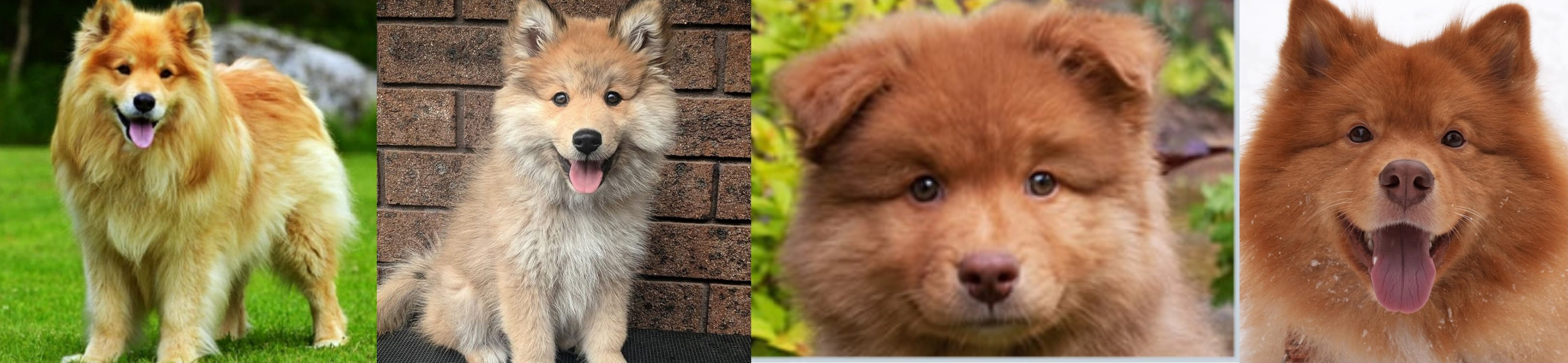
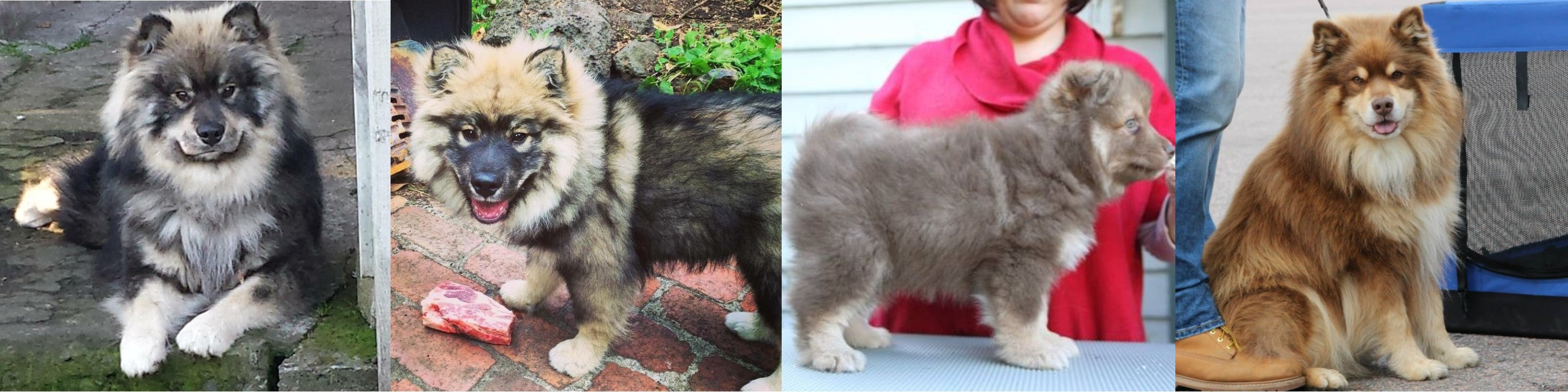
Sable and Wolf Sable are Dominant Colours and appear on the A Locus. This means that puppies only need ONE copy of the gene in order to be that colour and it is 'generally' due to a parent being that colour (although there are exceptions to this). They can be Black based or Brown based and the easiest way to distinguish which, is by looking at the pigment on their nose/lips/eyerims. If they are black, then you've got a black based Sable/Wolf Sable, if it's brown, you've got a brown based Sable/Wolf Sable. Sable is a beautiful golden colour that can range from a golden red to almost as light as cream. Wolf sable is traditionally a grey 'wolfy' colour that can vary from almost Black, right through to light grey.
Sable (Black and Brown based)
Wolf Sable (Black and Brown based)
Black and Tan
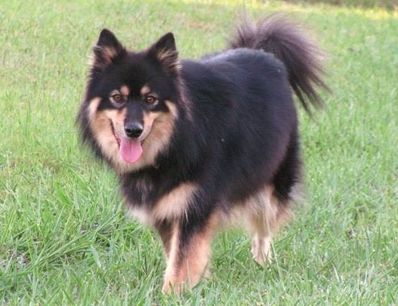
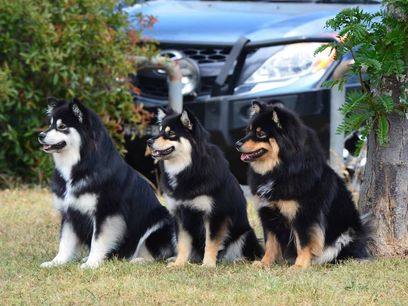
Black and Tan is probably the most common lappie colour. It also appears on the A Locus and is also dominant. Black and Tan however is a little different and kind of stuck in the middle, it's dominant over SOME colours and recessive to others, namely Sable and Wolf Sable. If one parent passed on a Sable gene to its a puppy, and the other passed on a Black and Tan gene, that puppy would actually be Sable! The 'Tan' portion of a B&T Lappie can range anywhere from white all the way through to the deepest caramel.
|
|
Solid Black
Solid Black is known as a recessive colour. The only way a dog can be this colour is if it inherited TWO recessive black genes, one from each parent. The parents do not have to be this colour in order to produce it, just take a look at our gorgeous Vader, both her parents carried the recessive black gene and passed it on to her. In Lappies, this colour is generally accompanied by 'Spectacles', a striking light ring of fur around their eyes. There is another version of Solid Black which is found on the K Locus and is dominant over everything else found on the A Locus, however we do not currently have any in Australia. As the name implies, it is characterised by the dog being one solid colour.
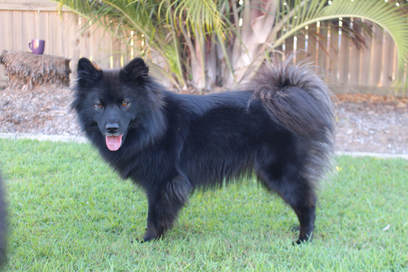
|
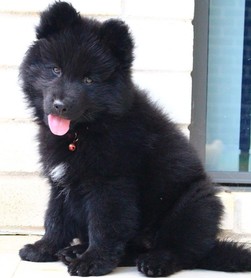
|
Brown and Tan/Solid Brown
Just like above, Brown and Tan and Solid Brown are recessive colours. The only way a dog can be these colours is by inheriting TWO copies of the genes, one from each parent. The slight difference with brown however is that it cancels out any and all black in the coat, meaning it is genetically impossible for a brown dog to have any black hairs! Brown and Tan is the colour of our handsome Ryker, his mum is a Brown and Tan and his dad is a Black and Tan, who carried a brown gene. Solid Brown is inherited the same way as Solid Black, but both parents have also passed on a brown gene.
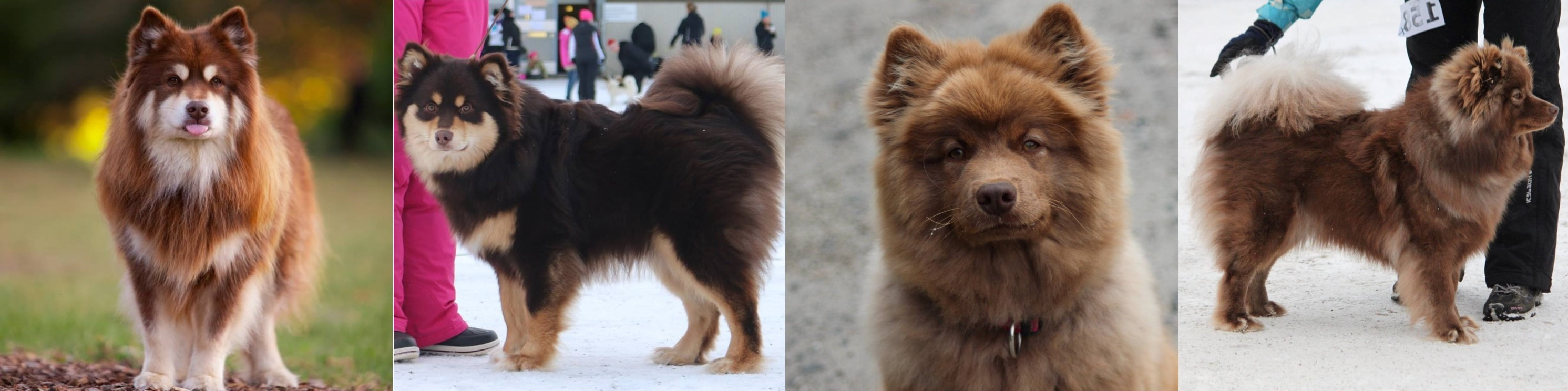
Cream
Cream is a fascinating and mysterious colour and can be found on the E Locus. Cream is also recessive and requires TWO copies of the gene to show. It's a little different to the other colours in that it can act as a 'mask'. The easiest way to describe this is to imagine taking a Sable/Wolf Sable/Black and Tan dog for example, and dunking it in a tub of cream paint, the dog will still be Sable/Wolf Sable/Black and Tan underneath, but will look Cream. Genetically it works the same, with cream hiding the dogs true colour. Cream can vary from white all the way through to a rich deep cream.
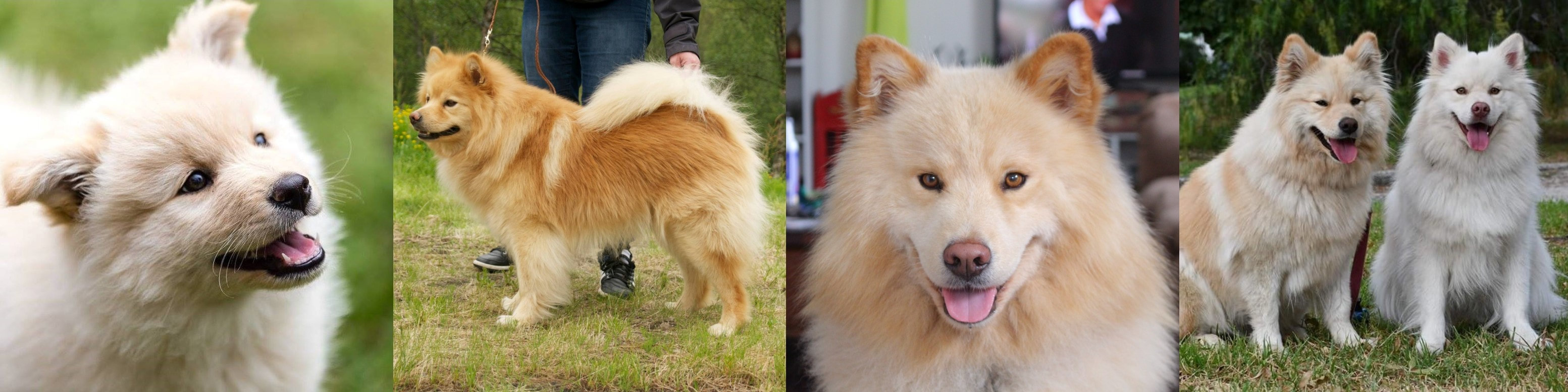
Domino
Domino is a colour we are still trying to work out but the general consensus seems to be that it is a simple recessive. It too is found on the E locus like Cream but unlike other recessive colours, it only seems to need ONE copy, in conjunction with Cream, in order to be expressed. From what we know in Lappies, there are 3 possibilities they can inherit on the E Locus: Normal (which means it has no effect on colour), Domino and Cream. For Domino, if one parent passes on a Cream or Domino gene and the other one passes on a Domino gene, it seems to appear, which suggests that it is dominant over Cream. If a parent passes on a 'Normal' gene, and the other a Domino, the colour can't be expressed, but the puppy will carry the Domino gene. Watch this space as we learn more!
It's generally characterised by big open face markings and a grey coloured coat. It can also be brown or black based.
It's generally characterised by big open face markings and a grey coloured coat. It can also be brown or black based.
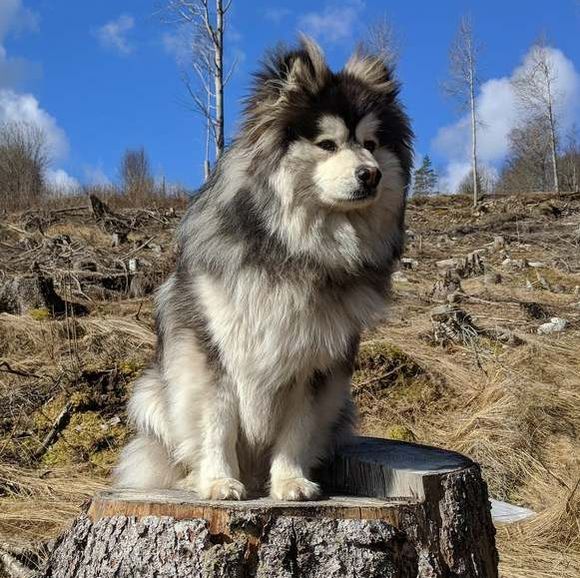
|
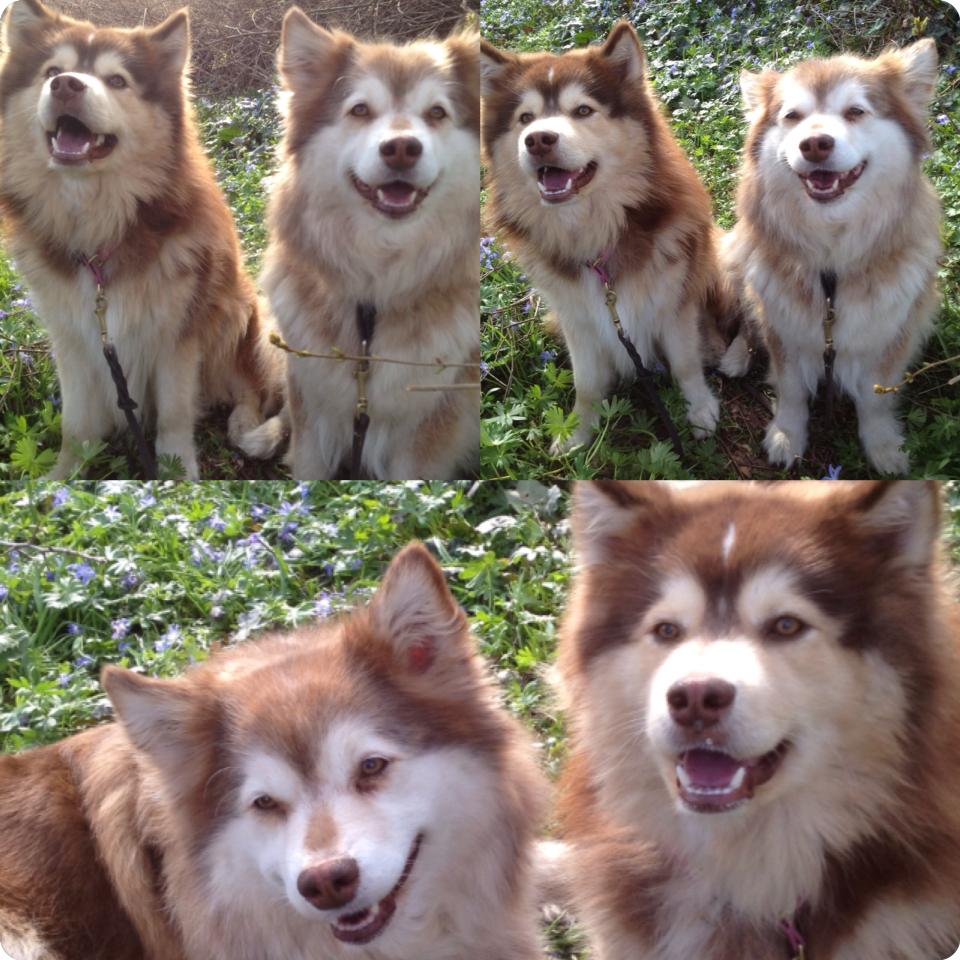
|
Blue and Lilac
Blue and Lilac are what we call 'Dilutes' and are found on the D Locus. These colours are generally uncommon in Australia, Lilac more so than Blue, but do pop up from time to time. The genes responsible for causing dilute are recessive, so a puppy needs a copy from each parent, and rather than being an actual colour, they modify the intensity of the black or brown in a dogs coat. If a black pup inherited the dilute gene, it would actually become Blue and if a Brown pup inherited the dilute gene, it would become Lilac.
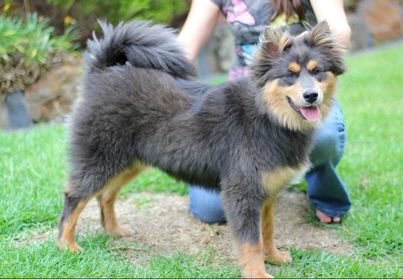
|
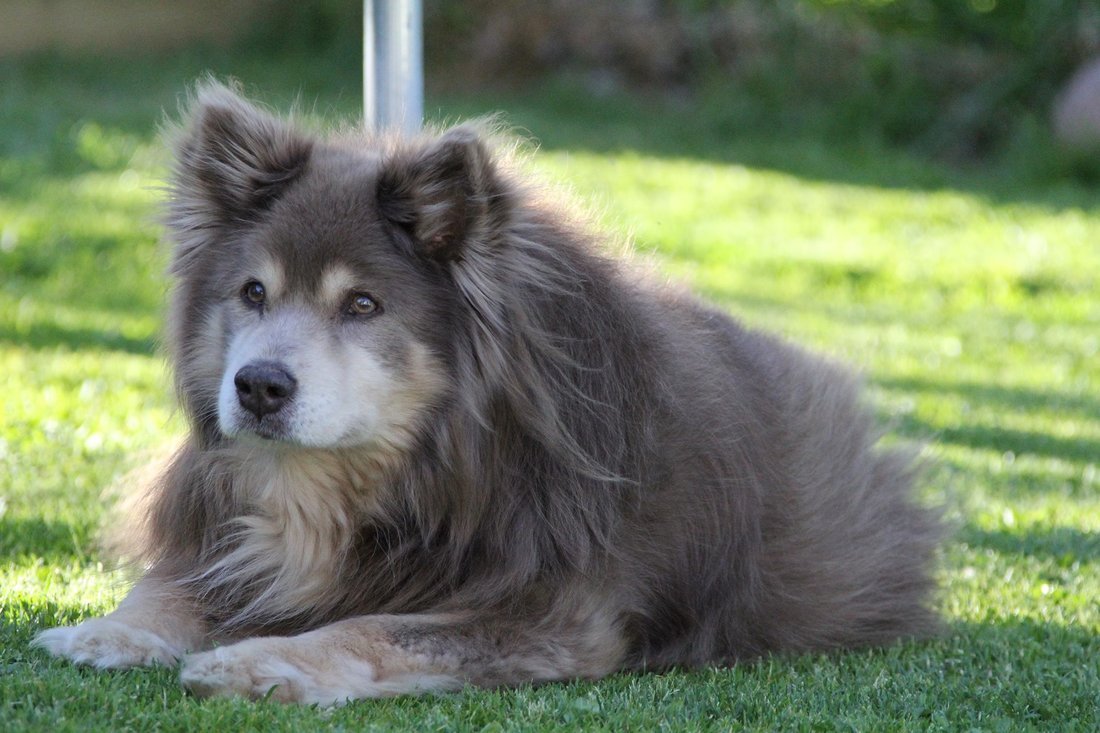
|
Page still under construction, check back soon